
How To Exercise With Stretch Bands
📖 Table of Contents
- Getting Started with Stretch Bands
- The Science Behind Stretch Bands
- Building a Full-Body Routine with Stretch Bands
- Tips for Maximizing Your Stretch Band Workout
- Stretch Bands for Rehabilitation and Recovery
- Stretch Bands for Mobility and Flexibility
- Stretch Bands for Seniors and Older Adults
- Make It Your Way
- Frequently Asked Questions
I remember the first time I used stretch bands — it was during a physiotherapy session after my knee injury. My therapist handed me a bright red band and said, 'This is going to change your workout routine.' At first, I was skeptical. I had never used resistance bands before, and I had no idea how they could help me regain strength without putting pressure on my knee. But after a few weeks, I realized how wrong I was. Stretch bands are not just for rehabilitation; they’re versatile tools that can transform any workout, no matter where you are.
What drew me to stretch bands was their simplicity and the way they fit into my busy life. I didn’t need a gym, a trainer, or a lot of space — just a few bands and a corner of my living room. I started with basic moves, like leg lifts and arm curls, and within days, I noticed a difference in how my muscles felt. It wasn’t just about strength; it was about control, balance, and the way my body responded to the resistance. I had always believed that effective workouts required heavy weights, but stretch bands showed me that even light resistance can be powerful when used correctly.
Now, I use stretch bands almost every day, and I can’t imagine going back to my old routine. They’ve become a staple in my fitness toolkit, and I’m constantly discovering new ways to incorporate them. Whether I’m doing a low-impact cardio session, a core strengthening routine, or even a full-body workout, stretch bands are there. They’re portable, easy to store, and affordable — but more than that, they work. If you’re looking for a way to add variety and effectiveness to your workouts, this is the guide you need.
Why You'll Love This Exercise Method
- They’re affordable and easy to store, making them perfect for home workouts.
- They offer resistance that can be adjusted to fit any fitness level.
- They’re low-impact, which makes them ideal for people with joint pain or injuries.
- They can be used for a wide range of exercises, from strength training to flexibility routines.
Getting Started with Stretch Bands
As of September 2026, before you begin, it’s important to choose the right type of stretch band for your fitness goals. There are different resistance levels, from light to extra-heavy, and each serves a different purpose. For beginners, a light or medium band is usually the best place to start. These bands are ideal for building foundational strength and learning proper form. I recommend investing in at least two bands — one for upper body workouts and another for lower body exercises.[1]
Once you have your bands, the setup is simple. You can use them on the floor, attach them to a door, or loop them around a stable object. I often use my bedroom door for upper body exercises like rows and shoulder presses. It’s a quick and easy way to create resistance without needing any additional equipment. Just make sure the band is securely fastened to avoid slipping during your workout.
The first thing I learned was to start slow. Even though the bands are lightweight, they can create significant resistance when used properly. Begin with a few repetitions of each exercise, focusing on form rather than speed. Over time, you’ll find that your muscles will become stronger, and you’ll be able to increase the resistance level as needed.
Light bands are ideal for beginners and flexibility work, while heavy bands are better for advanced strength training. Always start with a band that feels comfortable and manageable.
The Science Behind Stretch Bands
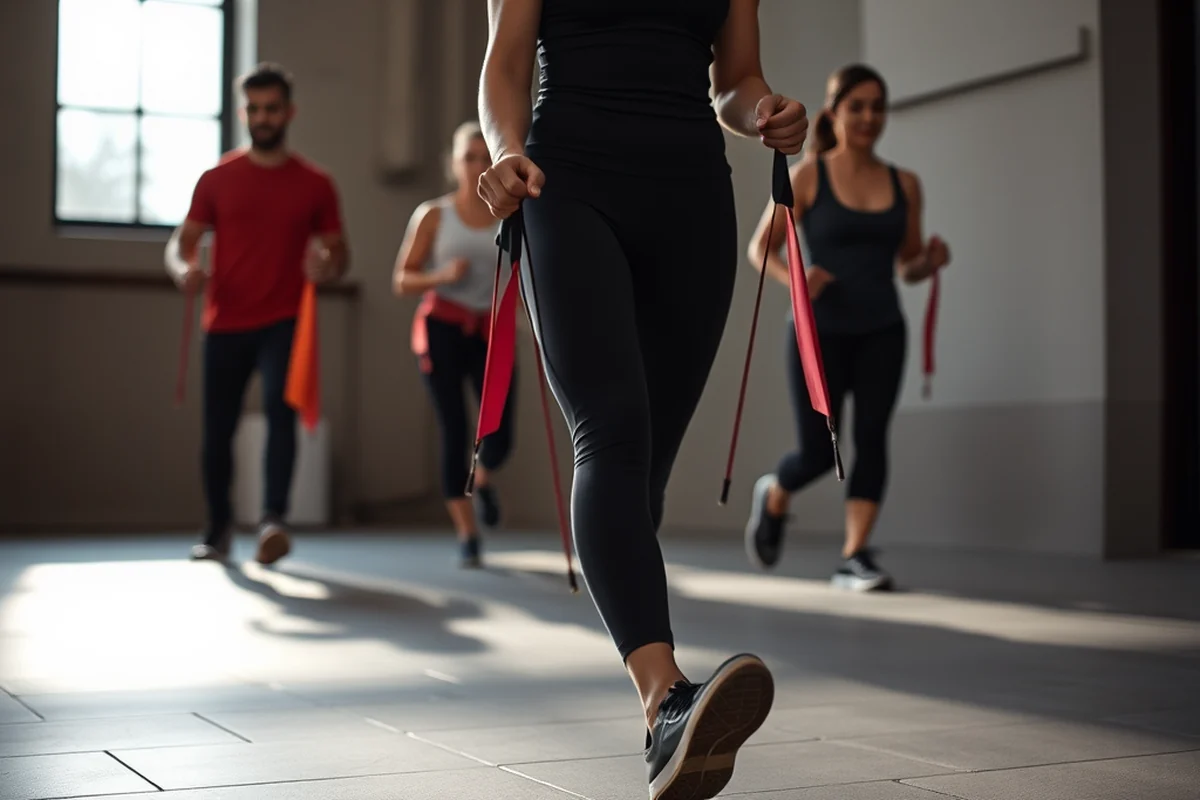
The science behind stretch bands is rooted in the principle of resistance training. When you stretch a band, it exerts force against your muscles, which helps build strength and improve muscle tone. Unlike free weights, stretch bands provide continuous tension throughout the entire range of motion, which can lead to better muscle engagement and endurance. I’ve noticed that using stretch bands has helped me tone my muscles more effectively, even when I’m not using heavy weights.
One of the key advantages of stretch bands is their ability to target specific muscle groups. Because they are elastic, you can position them in different ways to focus on different parts of your body. For example, using a band around your legs can help strengthen your glutes and hamstrings, while wrapping a band around your arms can provide resistance for your biceps and triceps. This level of customization makes them a versatile tool for any fitness level.
Another benefit of using stretch bands is that they help improve joint stability and flexibility. As you move through your exercises, the resistance helps your joints move in a controlled manner, which can reduce the risk of injury. I’ve found that using stretch bands regularly has helped me improve my balance and flexibility, especially in my hips and shoulders.
Stretch bands are the unsung heroes of resistance training — smart, effective, and adaptable.
Related: Knee stretch bandage
Building a Full-Body Routine with Stretch Bands
One of the things I love most about stretch bands is their ability to create a full-body workout with minimal equipment. By incorporating a variety of exercises, you can target your upper body, lower body, and core in one session. I usually start with a warm-up using light resistance to get my muscles ready for the workout. This could be something as simple as arm circles or leg swings with the band slightly stretched.
For the upper body, I like to use the band for rows, shoulder presses, and chest presses. These exercises help build strength in my back, shoulders, and chest. I’ve found that using a band for rows is especially effective — it helps me engage my back muscles in a way that free weights sometimes don’t. I typically do three sets of 12-15 repetitions for each exercise.[2]
For the lower body, I use the band for squats, lunges, and glute bridges. These exercises help strengthen my legs and glutes without putting too much stress on my joints. I also use the band for lateral walks, which are great for improving hip stability and balance. I’ve noticed that after a few weeks of using the band for these exercises, my legs feel stronger and more defined.
Setting up a mirror near your workout area can help you monitor your form and make sure you’re using the bands correctly. Good form is essential for maximizing the benefits of your workout.
“I remember the first time I used stretch bands — it was during a physiotherapy session after my knee injury.”— Knee Friendly Elliptical Workouts editors
Related: Knee stretch band
Tips for Maximizing Your Stretch Band Workout

One of the most important things to remember when using stretch bands is technique. Proper form is crucial for preventing injury and ensuring that you’re working the right muscles. I’ve found that using a mirror or recording my workouts helps me track my progress and correct any mistakes in my form. It’s also a good idea to start with light resistance and gradually increase it as your muscles become stronger.
Consistency is another key factor in making the most of your stretch band workouts. I try to use the bands at least three to four times a week, even if it’s just for a short 15-minute session. Over time, I’ve noticed that my muscles have become more defined and my overall endurance has improved. I’ve also found that alternating between different exercises and resistance levels keeps my workouts interesting and challenging.
Variety is another important aspect of using stretch bands. By incorporating different exercises and resistance levels into your routine, you can target different muscle groups and avoid plateaus. I often switch up my workouts by adding new exercises or changing the way I use the bands. This helps keep my muscles guessing and ensures that I’m getting the most out of every workout.
Related: What exercise helps knees
Stretch Bands for Rehabilitation and Recovery
I’ve used stretch bands for rehabilitation after my knee injury, and they’ve been a game-changer. They allow me to build strength without putting too much strain on my joints, which is essential during the recovery process. I’ve found that using the bands for low-impact exercises like leg lifts and hip abductions has helped me regain mobility and strength in my knee.
One of the things I love about using stretch bands for recovery is that they’re gentle on the body. They provide just enough resistance to challenge my muscles without causing pain or discomfort. I’ve found that using the bands consistently has helped me improve my range of motion and reduce stiffness in my joints. It’s also a great way to keep my muscles active without overexerting myself.
If you’re recovering from an injury, it’s important to work with a physical therapist or trainer to develop a safe and effective stretch band routine. They can help you choose the right exercises and resistance levels based on your specific needs. I’ve found that following a structured routine has made a huge difference in my recovery and has helped me get back to my regular workouts faster.
Related: Knee stretching device
Stretch Bands for Mobility and Flexibility
I’ve found that using stretch bands for mobility and flexibility has helped me improve my range of motion and reduce stiffness in my joints. One of my favorite exercises is the seated leg stretch, where I sit on the floor with my legs extended and use the band to pull my legs toward my chest. This helps stretch my hamstrings and improve my flexibility.
Another great exercise for mobility is the standing hip stretch. I stand with the band around my legs and gently move my hips from side to side. This helps stretch my hips and improve my balance. I’ve noticed that doing these exercises regularly has helped me move more freely and has reduced my risk of injury during my workouts.
I’ve also found that using stretch bands for yoga and Pilates is a great way to combine flexibility and strength training. Many yoga poses can be modified with the use of a band to provide additional resistance or support. It’s a great way to stay active and improve your overall fitness while also working on your flexibility.
Stretch bands are like a personal trainer — they help you move better, feel stronger, and stay flexible.
Related: Knee stretch hamstring
Stretch Bands for Seniors and Older Adults
I’ve seen many older adults benefit from using stretch bands as part of their fitness routine. They’re gentle on the joints and provide just the right amount of resistance to help seniors build strength without overexerting themselves. I’ve found that using the bands for light resistance exercises like arm curls and seated leg lifts has helped improve my balance and reduce my risk of falls.
One of the things I love about using stretch bands for seniors is that they’re easy to use and don’t require a lot of space. They can be used in the comfort of your own home, which makes them a great option for those who may have mobility issues or limited access to a gym. I’ve found that using the bands regularly has helped me stay active and maintain my independence as I age.
I also recommend that seniors work with a physical therapist or trainer to develop a safe and effective stretch band routine. They can help you choose the right exercises and resistance levels based on your specific needs. I’ve found that following a structured routine has made a huge difference in my overall health and has helped me stay active and independent for longer.[3]
🧘 Beginner-Friendly Routine
Start with light resistance and focus on form and mobility. Ideal for those new to stretch bands.
💰 Budget-Friendly Setup
Use a single band and focus on bodyweight exercises. Great for those with a limited budget.
⚡ Fastest Results Routine
Combine high-intensity interval training with stretch bands for quick results.
💪 Advanced Strength Training
Use heavy bands for compound exercises and advanced workouts. Ideal for experienced users.
🌿 Maintenance and Recovery
Focus on low-impact stretching and mobility exercises to maintain fitness and aid recovery.
| The mistake | Why it happens | The fix |
|---|---|---|
| Using a band that's too heavy for your fitness level. | This can lead to injury and improper form, which reduces the effectiveness of your workout. | Start with a light or medium band and gradually increase the resistance as your muscles become stronger. |
| Ignoring proper form to complete more repetitions. | Poor form can increase the risk of injury and reduce the effectiveness of your workout. | Focus on proper form and technique, even if it means doing fewer repetitions. |
| Overlooking the importance of warm-up and cool-down routines. | Skipping these steps can lead to muscle strain and reduce your overall performance. | Always include a warm-up and cool-down in your workout routine to prepare your muscles and help with recovery. |
| Not using a variety of exercises in your routine. | This can lead to muscle imbalances and limit the effectiveness of your workout. | Incorporate a variety of exercises to target different muscle groups and avoid plateaus. |
How To Exercise With Stretch Bands
Common Questions
Can stretch bands be used for weight loss?
Are stretch bands safe for people with joint pain?
How long should I use stretch bands in one session?
Can I use stretch bands without a gym membership?
References
- President's Council on Physical Fitness & Sports - HHS.gov (hhs.gov)
- kabat training program in diagonal pattern with elastic (cdn.clinicaltrials.gov)
- Fit and Strong! - Administration for Community Living (ACL) (acl.gov)
Cite this guide
Knee Friendly Elliptical Workouts (2026). How To Exercise With Stretch Bands. https://mildmotion.com/how-to-exercise-with-stretch-bands/
Feel free to cite or share this guide.