
How To Elliptical Workout
📖 Table of Contents
I remember the first time I stepped onto an elliptical machine in a gym. I had just moved to a new city and was looking for a way to stay in shape without the jarring impact of running. The elliptical had a quiet hum, and as I moved, I felt my legs working in a smooth, fluid motion. It was a revelation — I could train hard without the pounding on my knees. That day, I discovered the power of the elliptical for people like me, who needed a low-impact alternative to traditional cardio.
When I first started, I had no idea how to set it up or what the different settings meant. But after a few sessions, I learned to adjust the resistance, the incline, and the speed. What struck me most was how quickly my body adapted — my endurance improved, my heart rate stabilized, and I even felt a subtle shift in my posture. The elliptical became more than a piece of equipment; it was my personal trainer, always there, always pushing me a little further.
Now, I can't imagine working out without it. Whether I'm going for a high-intensity interval or a steady-state burn, the elliptical gives me the versatility and control I need. I've seen friends with knee issues, back pain, and even heart conditions benefit from it. If you're wondering how to elliptical workout, know this: it's not just about the machine — it's about how you use it, and the right approach can make all the difference.
Why You'll Love This Elliptical Workout Routine
- Protects your joints while giving you a full-body workout
- Burns calories efficiently without the strain of high-impact exercises
- Can be tailored to any fitness level, from beginner to advanced
- Improves heart health, endurance, and overall mobility
How to Set Up Your Elliptical Machine
As of September 2026, before starting your workout, take a moment to adjust the elliptical to your body. I always begin by standing on the machine with my feet centered on the foot plates. If they’re too wide or too narrow, I adjust them until I feel secure and in control. I’ve learned that the right foot positioning can make a big difference in how the machine feels under my body.
Next, I set the resistance. If I’m doing a high-intensity workout, I’ll increase the resistance, but for a steady-state session, I’ll keep it light. I also adjust the incline — raising it adds more of a leg and core challenge, while lowering it feels more like a smooth, gliding motion. It’s a simple setup, but it makes all the difference in how the workout feels and how effective it is.
I always take two to three minutes to warm up, starting with a slow pace and gradually increasing my effort. This helps my body get used to the movement and prevents injury. Setting up the elliptical correctly is the first step toward a safe and productive workout.
Align your feet slightly forward on the foot plates for better balance and control. If you feel unstable, adjust the foot plates inward.
Part of our Elliptical workouts guide.
Choosing the Right Workout Intensity
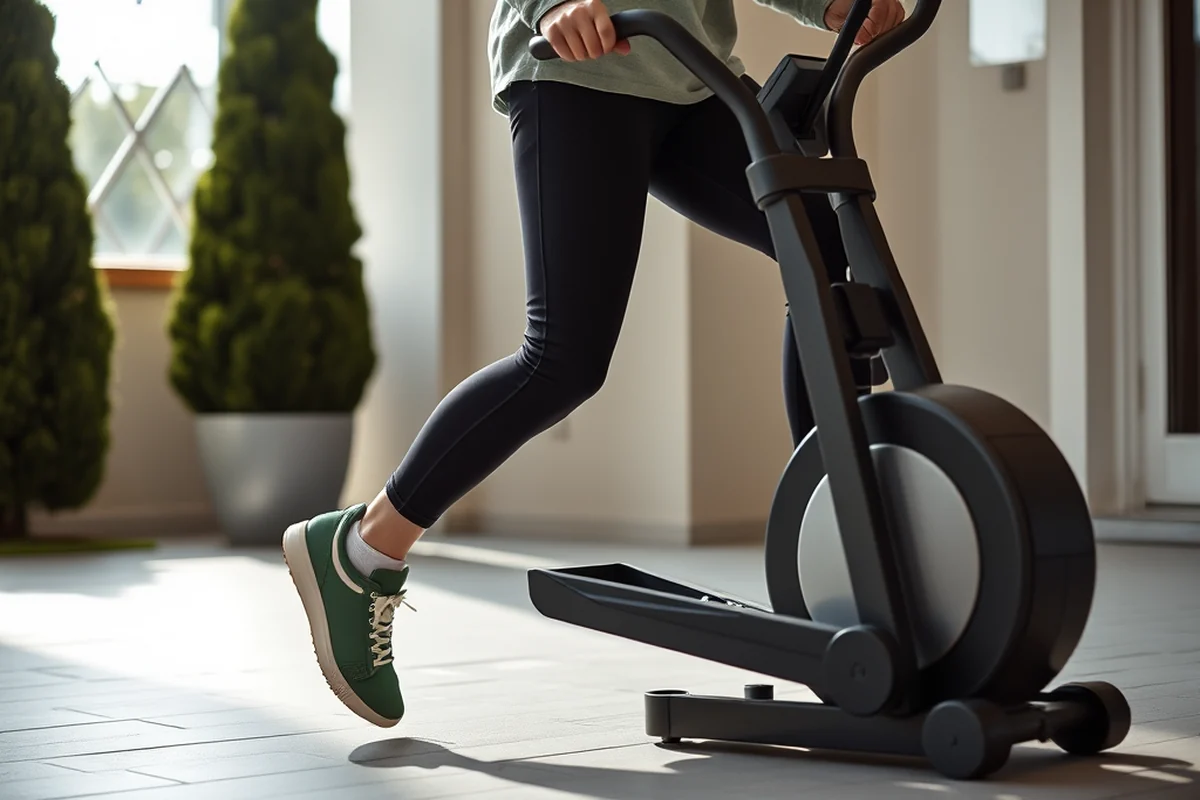
I used to think that going as fast as I could was the best way to get a good workout, but I quickly learned that it’s not about speed — it’s about effort. I began using the heart rate monitor on my elliptical to track my intensity. I aim for a heart rate that’s about 60–70% of my maximum, which I calculate using my age (220 minus my age).[1]
If I’m going for a steady-state workout, I keep the pace consistent and the resistance moderate. For interval training, I alternate between high and low resistance, pushing myself hard for 30 seconds and then recovering for 60. This keeps my heart rate up and my muscles engaged without burning out too quickly.[2]
I’ve found that listening to my body is key. If I feel out of breath or start to shake, I slow down. It’s not about pushing through pain — it’s about working smart and staying consistent.
Intensity is about effort, not just speed.
Related: Elliptical trainer app
Related: Is elliptical bad for knees
Related: Hard elliptical workouts
Related: Elliptical workouts letsrun
Related: How to ab workouts
Maximizing Upper Body Engagement
One of the biggest mistakes I made when I first started was ignoring my upper body. I thought the elliptical was just for my legs, but I quickly realized that moving my arms and leaning forward made a huge difference. I began using the handlebars, pushing and pulling with each stride.
I also started incorporating a slight lean forward with each movement, which engaged my core and made the workout feel more dynamic. It wasn’t just about moving my legs anymore — I was engaging my entire body, which made the workout more effective and more fun.
Over time, I noticed that my posture improved, and my arms became stronger. It was a game-changer — I was burning more calories and getting a better workout without changing machines.
Alternate between pushing the handlebars forward and pulling them back to keep your arms and core active throughout the workout.
“I remember the first time I stepped onto an elliptical machine in a gym.”— Knee Friendly Elliptical Workouts editors
How to Track Progress on the Elliptical

I used to feel like I was just going through the motions, but when I started tracking my progress on the elliptical, everything changed. I began setting goals — like burning 300 calories in one session or completing 30 minutes of continuous exercise — and I would celebrate each time I met them.[3]
I also used the distance and time metrics to measure how far I was going. Even though I wasn’t actually running, the elliptical’s display made it feel like I was moving forward, which helped me stay motivated. I set milestones for myself, like increasing my workout time by five minutes each week.
Tracking progress is about more than just numbers. It gives you a sense of accomplishment, and it helps you see how far you’ve come. I’ve met so many people who have transformed their bodies and their lives by simply tracking what they did on the elliptical.
How to Incorporate Interval Training
I used to think interval training was only for advanced athletes, but I learned that even beginners can do it. I started with short intervals — 30 seconds of high resistance and 60 seconds of low — and gradually increased the intensity as I got stronger.[4]
What I love about interval training is that it keeps your heart rate high and your muscles working. I can do it for as little as 20 minutes and still feel like I’ve had a full workout. I’ve also noticed that I burn more calories after the session, which is a bonus.
I now use a timer to keep track of my intervals. If I’m doing a 15-minute session, I’ll alternate between 45 seconds of high and 15 seconds of low. It’s a great way to push yourself without overexerting. Interval training is one of the most effective ways to use the elliptical.
How to Cool Down on the Elliptical
I used to rush off the elliptical as soon as my workout was over, but I quickly learned that cooling down is just as important as warming up. I now spend the last five minutes of my workout slowing down my pace and breathing deeply.
Cooling down helps my muscles recover and reduces the risk of soreness. I also take a few minutes after my workout to stretch my legs, arms, and back. It’s a simple step, but it makes a big difference in how I feel afterward.
I’ve noticed that cooling down properly helps me feel more energized the next day. It’s not just about the workout itself — it’s about how I recover and how I prepare for the next one.
A proper cool down can make your recovery faster and more efficient.
How to Stay Motivated on the Elliptical
The hardest part of any workout is staying motivated, and I used to struggle with that on the elliptical. I found that listening to music made a huge difference — I’d pick upbeat songs that kept me moving. I also started watching workout videos on my phone, which made the time pass faster.
Another thing that kept me going was setting small challenges — like completing 20 minutes without stopping or burning 500 calories in a session. I’d track my progress on a journal or app and reward myself when I met my goals. It made the workouts feel more like a game than a chore.
I’ve also joined online communities where people share their elliptical workouts and progress. It’s been a great way to stay accountable and get inspired by others. Staying motivated isn’t just about willpower — it’s about making the experience enjoyable.
🚶 Beginner: Start Slow
Focus on posture, foot position, and breathing. Keep resistance and speed low for the first few weeks.
💰 Budget: Use What You Have
No fancy equipment? Use a stationary bike or even walking in place to simulate elliptical movement.
⚡ Fastest: Interval Training
Alternate between high and low resistance for 30 seconds each to get a quick, effective workout.
🏋 Advanced: Add Resistance
Increase resistance and incline, and incorporate upper body movements for a full-body challenge.
🧘 Maintenance: Steady State
Keep a steady pace for 30–45 minutes. Ideal for maintaining fitness without pushing too hard.
| The mistake | Why it happens | The fix |
|---|---|---|
| Ignoring the resistance settings | Setting the resistance too low or too high can lead to inefficient workouts or injury. | Start with a moderate resistance level and adjust it as your fitness improves. |
| Overlooking foot position | Incorrect foot positioning can cause instability and reduce the effectiveness of your workout. | Adjust the foot plates so they align with your stride and provide a secure base. |
| Neglecting the cool-down phase | Not cooling down can increase the risk of muscle soreness and injury. | Spend the last few minutes of your workout gradually slowing down and stretching. |
How To Elliptical Workout
Common Questions
How long should my elliptical workouts be?
Can I do elliptical workouts every day?
How do I know if I’m working out at the right intensity?
What should I do if I feel dizzy during my workout?
References
- Healthy Habits: Elliptical training, morning workouts keep Dr. Joseph ... (blogs.bcm.edu)
- Does an elliptical or a treadmill give you a better workout? Experts ... (bu.edu)
- Exercise & Physical Fitness | Carteret County, NC - Official Website (carteretcountync.gov)
- Health & Wellness | Casa Grande, AZ (casagrandeaz.gov)
Cite this guide
Knee Friendly Elliptical Workouts (2026). How To Elliptical Workout. https://mildmotion.com/how-to-elliptical-workout/
Feel free to cite or share this guide.