How To Exercise With Kettlebells
📖 Table of Contents
- What Are Kettlebells and Why They Matter
- How to Choose the Right Kettlebell
- The Five Essential Kettlebell Exercises
- How to Structure Your Kettlebell Workout
- The Benefits of Kettlebell Training
- How to Progress in Kettlebell Training
- Kettlebell Training for Different Fitness Levels
- Make It Your Way
- Frequently Asked Questions
The first time I tried a kettlebell, I was skeptical. I had seen people swing them with wild, almost circus-like flair, and I wondered if it was something I could ever do. But within minutes, I was hooked. The weight felt alive in my hands, and the way it moved with me, not against me, was oddly comforting. Kettlebells are not just for the strong or the athletic — they're for people like me, who want to feel more connected to their bodies and see real results without spending hours in the gym.
I've been experimenting with kettlebells for over a year now, and the truth is, they're one of the most versatile tools I've ever used. Whether I'm doing a simple swing to warm up, or a complex circuit that leaves me breathless, I always feel like I'm making progress. There's a kind of intimacy with kettlebells that I don't get with other equipment — they're heavy, they're grounded, and they respond directly to your effort. It's not about looking good in a mirror; it's about feeling stronger in your bones.
What I love most is that kettlebells can be tailored to your fitness level and goals. I've used them for building strength, improving balance, and even for mental clarity. If you're new to them, you might start with just a few basic moves, but as you get more comfortable, you'll find ways to challenge yourself. It's a journey that starts with a simple question: 'How to exercise with kettlebells?' — and the answer is more accessible than you might think.
Why You'll Love This Kettlebell Journey
- Builds full-body strength in a short time with minimal equipment
- Improves joint mobility and posture with every rep
- Reduces the risk of injury through natural movement patterns
- Boosts cardiovascular fitness and mental focus simultaneously
What Are Kettlebells and Why They Matter
As of September 2026, Kettlebells are different from dumbbells because of their shape — they're round and have a long handle, which allows for dynamic movements like swings, presses, and cleans. Unlike dumbbells, which sit in your hands, kettlebells roll and shift, forcing your body to stabilize them. This makes them incredibly effective for building strength, coordination, and even cardiovascular endurance in one go.
I remember my first kettlebell swing — it felt like I was holding a live weight, and my body had to work together to control it. It wasn't just my arms doing the work; my core, legs, and even my glutes were all engaged. That's the magic of kettlebells: they create a full-body workout with minimal equipment.
The versatility of kettlebells is unmatched. You can use them for strength training, mobility work, and even for balance exercises. Whether you're trying to build muscle or improve your posture, kettlebells can help you do it in a way that feels natural and intuitive.
If you're new to kettlebells, start with a 12-16kg kettlebell for men and 8-12kg for women. This allows you to focus on form before increasing the weight.[1]
Part of our Elliptical workouts guide.
How to Choose the Right Kettlebell
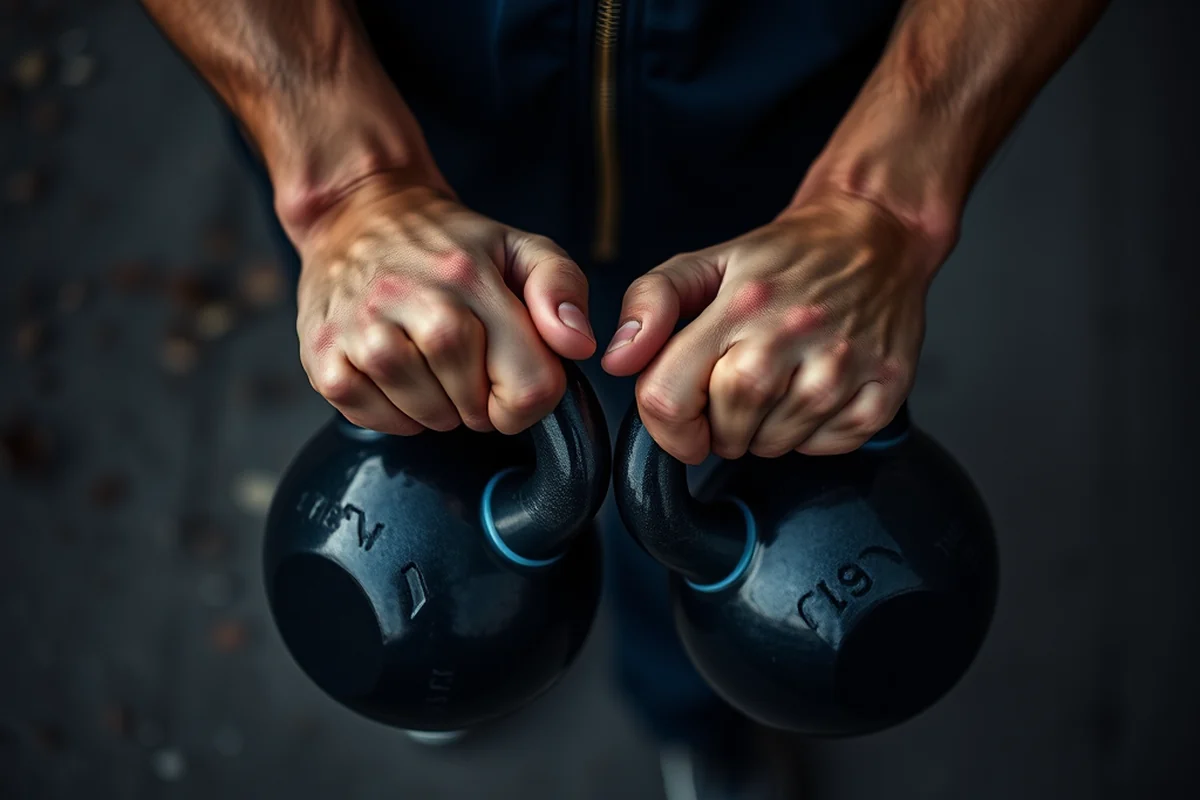
The right kettlebell for you depends on your fitness level, goals, and the types of exercises you want to do. For beginners, a 12-16kg (26-35lbs) kettlebell is usually a good starting point. This allows you to focus on mastering the basics without being overwhelmed by the weight.[2]
I bought a 16kg kettlebell when I started, and it was the perfect weight for learning swings, presses, and squats. As I got stronger, I upgraded to a 24kg kettlebell for more advanced work. The key is to find a weight that challenges you without making you compromise your form.
Look for kettlebells that are made of durable steel and have a textured handle for better grip. Avoid cheap plastic ones — they can be dangerous and won't last long. A good kettlebell should feel solid in your hands and stay in place during your workouts.
Invest in quality — your body will thank you.
Related: How to ab workouts
The Five Essential Kettlebell Exercises
The kettlebell swing is the most popular and effective exercise. It targets your hamstrings, glutes, and lower back while also working your core. The key is to use your hips to generate power, not just your arms. I learned this the hard way — my first few swings were all arm strength, and I quickly got tired.
Next is the kettlebell press. This is a great exercise for building shoulder strength and improving upper body stability. It's also a good way to work on your posture. I used to slouch when doing this, but once I focused on keeping my core tight, I noticed a huge difference in my form.
The goblet squat is another essential move. It's perfect for beginners and helps build lower body strength while also improving balance. I used this to build confidence before moving on to more advanced exercises like the clean and press.
Every kettlebell exercise requires core engagement. If your core is not tight, your form will suffer, and you'll be more likely to get injured. Focus on keeping your abs braced throughout each movement.
“The first time I tried a kettlebell, I was skeptical.”— Knee Friendly Elliptical Workouts editors
Related: Exercise bands with handles
How to Structure Your Kettlebell Workout
If you're new to kettlebell training, start with a full-body circuit that includes a mix of strength and cardiovascular exercises. A typical circuit might consist of 10 kettlebell swings, 10 goblet squats, and 10 kettlebell presses, repeated for 3-4 rounds. This helps you build strength while also getting your heart rate up.[3]
I found that doing 3 rounds of a circuit was enough to feel a good workout without overexerting myself. The key is to listen to your body and not push too hard too fast. Over time, you can increase the number of rounds or the weight you're using.
If you're short on time, you can focus on a few key exercises and do a higher number of reps. For example, 30 kettlebell swings, 20 goblet squats, and 15 kettlebell presses can be done in under 15 minutes. This is a great way to fit a quick but effective workout into your day.[4]
Related: What is exercise equipment
The Benefits of Kettlebell Training
One of the biggest benefits of kettlebell training is that it improves joint mobility and posture. The dynamic movements required in kettlebell exercises help increase your range of motion and strengthen your stabilizing muscles. I noticed a significant improvement in my posture after just a few weeks of training.
Kettlebells also help build functional strength — the kind of strength that translates to everyday activities like lifting groceries or carrying a child. Unlike traditional weightlifting, which focuses on isolating specific muscles, kettlebells work multiple muscle groups at once, making them ideal for real-world strength.
Another benefit is that kettlebells can help improve your cardiovascular fitness. The high-intensity nature of kettlebell workouts elevates your heart rate, leading to improved endurance and overall fitness. I've noticed that my stamina has increased significantly, and I feel more energized throughout the day.
Related: Best shoes for elliptical workouts
How to Progress in Kettlebell Training
As you become more comfortable with the basics, you can start increasing the weight of your kettlebells. This allows you to challenge your muscles further and continue making progress. I started with a 16kg kettlebell and gradually moved up to 24kg as my strength improved.
You can also increase the number of rounds or reps in your circuit. For example, if you were doing 3 rounds of a circuit, you can increase it to 4 or 5. This helps build endurance and keeps your workouts challenging.
Another way to progress is to incorporate more advanced exercises, such as the kettlebell clean and press or the kettlebell snatch. These moves require more coordination and strength but can help you take your training to the next level.
Progress is a journey, not a race.
Related: Elliptical workout routine
Kettlebell Training for Different Fitness Levels
For beginners, it's important to focus on mastering the basics and building a strong foundation. This includes learning proper form and technique before increasing the weight or intensity of your workouts. I recommend starting with a few basic exercises and gradually working your way up.
Intermediate trainees can focus on increasing the weight and complexity of their workouts. This might involve using heavier kettlebells or incorporating more advanced exercises into their routine. It's also a good time to start paying more attention to your form and technique.
Advanced trainees can push their limits by working with heavier weights and more complex exercises. This might include performing kettlebell circuits with high reps or incorporating kettlebell training into a broader fitness routine. The key is to continue challenging yourself while maintaining proper form and technique.
🏋️ Beginner's Kettlebell Routine
A simple, full-body routine for those new to kettlebell training, focusing on form and technique.
💰 Budget-Friendly Kettlebell Setup
A cost-effective way to start kettlebell training with just one or two kettlebells and minimal equipment.
⏱️ Fastest Kettlebell Workout
A quick, high-intensity kettlebell routine that can be completed in under 15 minutes for maximum efficiency.
🔥 Advanced Kettlebell Circuit
A challenging kettlebell workout for experienced trainees looking to push their limits and build strength.
🏃 Maintenance Kettlebell Routine
A low-impact kettlebell workout designed to help you maintain your fitness and avoid injury.
| The mistake | Why it happens | The fix |
|---|---|---|
| Using too heavy a kettlebell for beginners | Using a kettlebell that's too heavy can lead to poor form and increase the risk of injury. | Start with a lighter weight and gradually increase as you build strength and confidence. |
| Neglecting core engagement | Failing to engage your core can lead to poor form and increase the risk of injury. | Focus on keeping your core tight throughout each movement to maintain proper form and stability. |
| Swinging the kettlebell with your arms instead of your hips | Swinging the kettlebell with your arms instead of your hips can lead to shoulder strain and reduce the effectiveness of the exercise. | Use your hips to generate power during swings, keeping your arms relaxed and your core engaged. |
| Ignoring proper warm-up and cool-down | Failing to warm up and cool down can increase the risk of injury and reduce the effectiveness of your workout. | Always start with a light warm-up and end with a cool-down to prepare your body for exercise and help it recover. |
How To Exercise With Kettlebells
Common Questions
What weight kettlebell should I start with?
How long should a kettlebell workout be?
Can kettlebells help with weight loss?
Are kettlebells safe for beginners?
References
- Performance Triad - GovInfo (govinfo.gov)
- Kettlebell Strong (emergency.jacksonms.gov)
- Physiological Effects of a Kettlebell Workout versus a High (scholarworks.uark.edu)
- The Global Assessment Tool (GAT) is the Army's confidential, online ... (reginfo.gov)
Cite this guide
Knee Friendly Elliptical Workouts (2026). How To Exercise With Kettlebells. https://mildmotion.com/how-to-exercise-with-kettlebells/
Feel free to cite or share this guide.