
How To Exercise With Bands
📖 Table of Contents
- Understanding Your Band's Resistance Level
- How to Use Bands for Upper Body Strength
- Lower Body Workouts with Bands
- Using Bands for Core Stability and Balance
- Combining Bands with Bodyweight Exercises
- Advanced Band Workouts for Muscle Growth
- Using Bands for Rehabilitation and Mobility
- Make It Your Way
- Frequently Asked Questions
I remember the first time I tried resistance bands in my small, cluttered home gym. My knees had been aching for weeks from my usual running routine, and I needed a low-impact alternative. I picked up a simple loop band from a local sports store for under $10, and within minutes, I was doing leg lifts with a level of precision I hadn't felt in months. It was a revelation — not only was the movement pain-free, but it also felt oddly empowering, like I was unlocking a new layer of strength I didn’t know I had.[1]
Resistance bands have become a staple in my daily routine since that day. They’re not just a gimmick for people who can’t afford gym memberships or don’t like the idea of sweating in a crowded room. They’re a powerful, portable, and effective tool that can transform your workout experience — whether you’re a beginner, a seasoned athlete, or someone recovering from an injury. The best part? You can use them almost anywhere, from the comfort of your living room to the top of a mountain.
What I love most about bands is their simplicity. They’re affordable, versatile, and surprisingly challenging when used correctly. Over the past year, I’ve experimented with different types — from light loops to heavy resistance bands — and I’ve found that the right band can make a world of difference in your fitness journey. Whether you're working on balance, building muscle, or improving your posture, bands can be a game-changer — and I'm here to walk you through exactly how.
Why You'll Love This Approach
- No equipment needed — just a band and your body
- Target multiple muscle groups with a single tool
- Easily adjustable to suit your fitness level
- Great for home workouts, travel, or on-the-go training
Understanding Your Band's Resistance Level
As of September 2026, Resistance bands come in a range of tension levels, from light to extra-heavy. I used to buy the cheapest ones I could find, but they were too loose and didn’t provide enough resistance. After switching to a medium-heavy band, I noticed a big difference — my muscles were working harder, and I was able to build strength faster.
Light bands are ideal for beginners or for targeting smaller muscles like the shoulders and arms. Medium bands are the most common and can be used for a wide variety of exercises. Heavy bands are great for advanced users or for those looking to build significant muscle mass. I now have a set of three different bands, and I rotate them depending on my goals for the day.
A good rule of thumb is to select a band that allows you to complete 10–15 repetitions with proper form before it becomes too difficult. If you’re struggling to complete even five repetitions, you may be using a band that’s too heavy. This simple check can help you avoid overexertion and ensure you’re getting the most out of each rep.[2]
Before buying a resistance band, test it by doing a few basic exercises at a store. This will help you determine the right level of tension for your needs.
Part of our Resistance bands guide.
How to Use Bands for Upper Body Strength
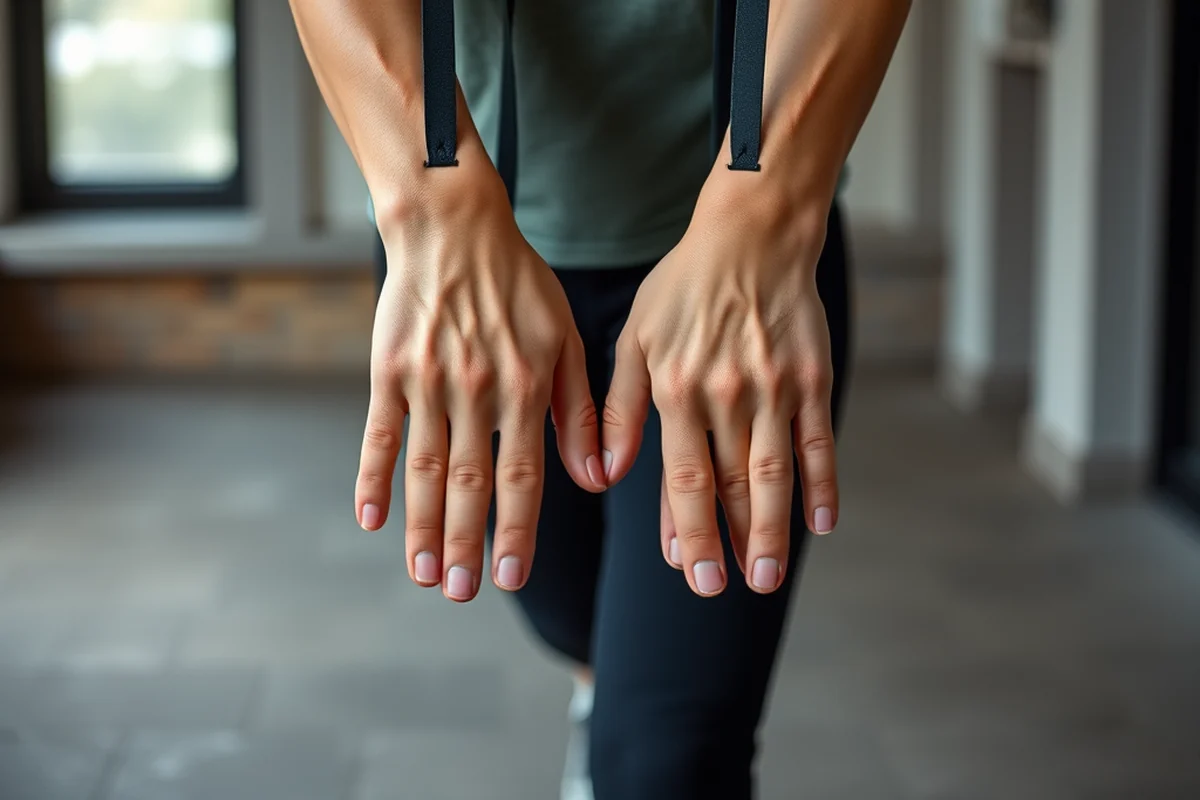
I’ve used resistance bands to target my shoulders, chest, and back, and the results have been impressive. One of my favorite exercises is the band pull-apart, which is great for improving posture and strengthening the rear delts and upper back. I do three sets of 15 reps, and I can feel my muscles working immediately.[3]
For chest workouts, I use the band in a similar way to dumbbells. By stepping into the band and pulling it toward my chest, I mimic a chest press movement. It’s a full-body workout that also engages my core and helps me maintain good form throughout the exercise.
Bands are also a great tool for shoulder exercises. I use them for lateral raises and front raises, and I’ve noticed a significant improvement in my shoulder stability and strength over the past few months. The band provides constant tension, which helps keep the muscles engaged throughout the entire range of motion.
Bands are the unsung heroes of upper body strength training.
Related: What are knee highs workout
Related: What is exercise bands
Related: How to exercise with the band
Related: Resistance bands for knee rehab
Lower Body Workouts with Bands
I use resistance bands for lower body workouts almost every day, and they’ve become my go-to tool for improving my balance and strength. One of my favorite exercises is the band squat, which I do with the band looped around my legs. This helps me maintain proper form and engage my glutes and quads more effectively.
Another great lower body exercise is the band step-up. I place the band around my thighs and step up onto a low platform, which challenges my legs in a way that regular squats can’t. It’s a fantastic way to build lower body strength without putting too much strain on my knees.
I’ve also found that using bands for hip thrusts and glute bridges has significantly improved my glute strength. The band adds resistance and helps me focus on squeezing my glutes at the top of each rep, which has led to noticeable improvements in my overall lower body strength.
Make sure the band is tight enough during lower body exercises to provide the right amount of resistance. If it’s too loose, you won’t get the full benefit of the exercise.
“I remember the first time I tried resistance bands in my small, cluttered home gym.”— Knee Friendly Elliptical Workouts editors
Using Bands for Core Stability and Balance

I’ve used resistance bands for core workouts, and they’ve made a huge difference in my stability and balance. One of my go-to exercises is the band crunch, which targets the abs and helps improve core engagement. I do three sets of 15 reps, and I can feel my core working harder than ever.[4]
Another effective core exercise is the band side plank. I place the band around my thighs and hold the plank position, which helps me maintain stability and keep my body aligned. This exercise has improved my core strength and helped me build better posture.
I’ve also used bands for balance training by standing on one leg and holding the band taut with my feet. This not only improves balance but also strengthens the muscles in my legs and core. It’s a simple but effective way to enhance overall body control and stability.
Combining Bands with Bodyweight Exercises
I often combine resistance bands with bodyweight exercises to create a more challenging and effective workout. For example, I use the band during push-ups to add extra resistance and engage my chest and triceps more effectively. This has helped me build more strength and improve my overall push-up form.
I’ve also used bands during bodyweight squats to increase the difficulty. By looping the band around my legs and stepping into it, I add tension that helps me target my glutes and quads more effectively. This has been a game-changer for my lower body strength.
Combining bands with bodyweight exercises allows me to build strength without needing any additional equipment. It’s a great way to keep my workouts varied and challenging, while also improving my overall fitness and muscle tone.
Advanced Band Workouts for Muscle Growth
As I’ve become more comfortable with resistance bands, I’ve started incorporating more advanced workouts into my routine. One of my favorite advanced exercises is the band row, which targets the back muscles and helps build significant strength. I do three sets of 12 reps, and I can feel my back muscles working harder than ever.
Another advanced workout is the band deadlift. I place the band around my legs and pull it toward my chest, which mimics a traditional deadlift movement. This exercise has helped me build more strength in my legs and back, and I can feel the difference in my overall performance.
I’ve also started using bands for pull-ups and chin-ups, which has significantly improved my upper body strength. The band adds resistance and helps me maintain proper form throughout the entire movement, making it a great way to build muscle and improve overall fitness.
Advanced band workouts are a great way to push your limits and build real muscle.
Using Bands for Rehabilitation and Mobility
I’ve used resistance bands for rehabilitation after a minor knee injury, and they’ve been incredibly helpful in my recovery. One of my favorite exercises is the band hamstring stretch, which helps improve flexibility and reduce muscle tension. I do this stretch every morning and have noticed a significant improvement in my range of motion.
Bands are also great for improving mobility and joint health. I use them for shoulder stretches and hip openers, which help keep my joints moving smoothly and reduce stiffness. This has been especially helpful for me during long days at the office or after intense workouts.
Using bands for rehabilitation and mobility has helped me maintain a more active lifestyle, even during times when I’m not able to do my usual workouts. It’s a simple but effective way to stay in shape and keep my body moving.
🏋️ Beginner
Start with light bands and simple exercises to build foundational strength and familiarity.
💰 Budget
Use a single light band for a variety of exercises and focus on form over intensity.
⚡ Fastest
Perform high-repetition, low-intensity workouts to maximize time and efficiency.
🔥 Advanced
Use heavy bands and complex exercises to challenge your strength and endurance.
🔄 Maintenance
Use bands for daily stretching and mobility exercises to maintain flexibility and joint health.
| The mistake | Why it happens | The fix |
|---|---|---|
| Using a band that's too loose | A loose band doesn’t provide enough resistance and can lead to improper form and reduced effectiveness. | Choose a band that allows you to complete 10–15 repetitions with proper form before it becomes too difficult. |
| Ignoring form for the sake of intensity | Poor form can lead to injury and reduce the effectiveness of your workout. | Always prioritize proper form over the number of repetitions or the intensity of the exercise. |
| Not warming up before using the band | Warming up is essential to prepare your muscles and joints for the workout and reduce the risk of injury. | Spend 5–10 minutes warming up before starting your band workout. |
| Overlooking the importance of rest days | Rest days are crucial for muscle recovery and overall progress. | Incorporate rest days into your workout routine and allow your muscles time to recover. |
How To Exercise With Bands
Common Questions
What are the best types of resistance bands for beginners?
Can I use resistance bands if I have joint pain?
How long should I use a resistance band during a workout?
What if the band slips during an exercise?
References
- kabat training program in diagonal pattern with elastic (cdn.clinicaltrials.gov)
- Wall Walking with Bands - Video on Demand - Cornell University (cornell.edu)
- Land Fitness Classes | Dallas OR (dallasor.gov)
- Exercise of the Month: Elbow Extension with Resistance Band (eskenazihealth.edu)
Cite this guide
Knee Friendly Elliptical Workouts (2026). How To Exercise With Bands. https://mildmotion.com/how-to-exercise-with-bands/
Feel free to cite or share this guide.