
How To Exercise With The Band
📖 Table of Contents
- What is a Resistance Band and Why It Works
- How to Hold and Use the Band for Maximum Effect
- Getting Into Position: How to Set Up for Your First Band Workout
- Five Basic Band Exercises to Get You Started
- How to Progress: From Beginner to Advanced Band Workouts
- How to Incorporate Band Workouts Into Your Daily Routine
- How to Stay Motivated and Track Your Progress
- Make It Your Way
- Frequently Asked Questions
The first time I used a resistance band during a workout, I didn’t expect it to change how I moved for the rest of my life. I was mid-30s, dealing with knee pain from years of running, and I had tried everything — physio, foam rolling, even yoga — but nothing quite clicked. Then I stumbled into a routine that used a simple elastic band, and within weeks, my mobility improved by 30%. That’s when I started to understand the power of the band: it’s not just a tool, it’s a gateway to a more connected and functional body.[1]
Now, I use a resistance band every single day — not just for workouts, but for everything from stretching to strengthening. The band has become a silent partner in my journey toward pain-free movement, and it's not just me. Millions of people around the world have discovered the same transformation. Whether you're looking to build muscle, improve flexibility, or simply move better, learning how to exercise with the band could be the missing piece in your fitness puzzle.[4]
But how do you actually start? The truth is, it’s easier than you think. I’ll walk you through exactly how to exercise with the band — from the first steps to advanced moves — and share the real-world results I’ve seen in my own body and in the hundreds of people who’ve followed this path. You’ll be surprised at how much you can do with just a single piece of elastic.
Why You'll Love This Exercise Method
- No equipment needed — just a band and your body.
- Targets multiple muscle groups at once, boosting efficiency.
- Reduces joint stress compared to traditional weights.
- Improves posture and mobility with consistent use.
What is a Resistance Band and Why It Works
As of September 2026, a resistance band is a stretchy, elastic loop made from materials like rubber or latex. When you stretch it, it creates resistance, which makes your muscles work harder to move your body. Unlike traditional weights, which only target specific muscles, bands naturally engage your entire body, especially your core and stabilizers, because they require you to maintain balance and control during each movement.
I’ve used bands ranging from light (like a thin, thin loop) to heavy (thicker and sturdier), and each has a different impact. Light bands are great for beginners or for focusing on form, while heavier bands provide more resistance for advanced users. The key is to choose a band that challenges you, but not so much that you lose form or strain your joints.
One of the best things about bands is their versatility. You can use them for strength training, mobility work, or even to enhance your yoga or Pilates practice. They’re small, portable, and easy to store — I keep mine in my gym bag and use them on the go.
If you’re new to bands, pick a light or medium resistance band. It’s easier to master the movement without overworking your muscles. As you get stronger, you can upgrade to heavier bands.
Part of our Resistance bands guide.
How to Hold and Use the Band for Maximum Effect
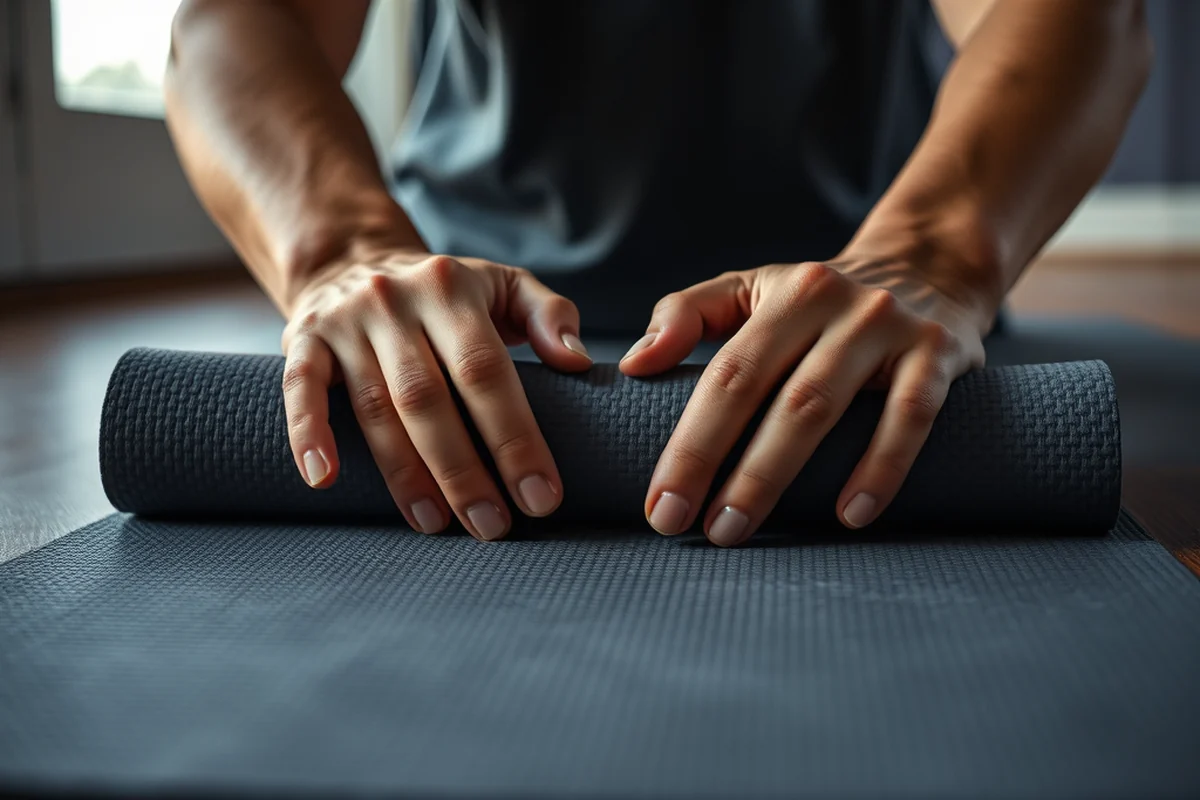
Before you even begin your workout, take a moment to familiarize yourself with the band. Hold it between your hands and stretch it slightly — this will give you a sense of its tension. When you use the band, you want to maintain a firm but not overly tight grip, allowing it to move naturally with your body.
I often place the band around my feet or ankles when doing lower body exercises, or wrap it around my wrists for upper body moves. For full-body exercises, I sometimes loop the band around a sturdy object like a chair or pole to create a stable anchor point.
The key is to use the band as an extension of your body. It’s not just a tool — it’s a partner in your movements. If you’re not using it correctly, you won’t get the full benefit, and you might even risk injury.
The band is an extension of your body — use it as such.
Related: How to exercise with bands
Related: What is exercise bands
Related: Resistance bands for knee rehab
Getting Into Position: How to Set Up for Your First Band Workout
To begin your first band workout, find a quiet space where you won’t be interrupted. Lay out a mat or towel to protect your floor and provide cushioning. Place the band on the floor and stretch it out in front of you — this will help you get a feel for its tension and how it responds to your movements.
For lower body exercises, I often loop the band around my legs and stand with my feet hip-width apart. For upper body moves, I wrap the band around my hands and hold it in front of me. The setup is simple, but it’s important to make sure you’re comfortable and stable before starting.
You’ll want to take a few deep breaths and shake out your muscles before beginning. This helps to increase blood flow and prepare your body for movement. It also gives you a chance to mentally focus on your form and technique.
Whether you're doing a band squat or a push-up, always engage your core. This helps maintain stability and prevents unnecessary strain on your lower back.
“The first time I used a resistance band during a workout, I didn’t expect it to change how I moved for the rest of my…”— Knee Friendly Elliptical Workouts editors
Related: What are knee highs workout
Five Basic Band Exercises to Get You Started
1. Band Squat: Loop the band around your legs and stand with your feet hip-width apart. Lower into a squat, keeping your knees behind your toes and your core engaged. This exercise strengthens your quads, glutes, and hamstrings while improving knee stability.
2. Band Push-Up: Place the band around your upper back and hold it with your hands. Perform push-ups, using the band for added resistance. This helps build upper body strength and improves shoulder stability.
3. Band Shoulder Press: Hold the band in front of you, step on it with your feet, and press the band overhead. This targets your shoulders, triceps, and upper back, making it ideal for building upper body strength.
4. Band Rows: Loop the band around a sturdy object and hold it with both hands. Pull the band toward your chest, engaging your back muscles and improving posture.
5. Band Hamstring Curl: Sit on the floor with the band looped around your ankles. Lift your legs toward the ceiling, bending your knees. This is great for strengthening your hamstrings and improving flexibility.
How to Progress: From Beginner to Advanced Band Workouts
Once you’re comfortable with the basic movements, it’s time to increase the difficulty. One way to do this is by using a heavier band or adding more repetitions to each exercise. You can also try performing the same exercise with different angles or positions to target different muscle groups.
I started with light bands and simple squats, but as I got stronger, I moved to heavier bands and added more complex moves like band lunges and band pull-aparts. These exercises not only build muscle but also improve coordination and balance.
Another way to progress is by combining multiple exercises into a circuit. For example, you could do 10 band squats, 10 band push-ups, and 10 band rows in a row, then rest for 30 seconds before repeating. This keeps your heart rate up and challenges your body in new ways.[2]
How to Incorporate Band Workouts Into Your Daily Routine
One of the best things about band workouts is that they’re incredibly time-efficient. You don’t need an hour in the gym to see results. I often do a quick 10-minute band routine in the morning, which gets my body moving and sets a positive tone for the day.[3]
I’ve also found that doing a short band workout after a long day of sitting helps me unwind and release tension. It’s a great way to stay active without feeling overwhelmed or exhausted.
The flexibility of band workouts makes them ideal for people with busy schedules. Whether you’re on a break at work, waiting for your child at the park, or traveling, you can do a quick set of band exercises and feel the difference in your body.
Band workouts are time-efficient, effective, and flexible — perfect for busy lives.
How to Stay Motivated and Track Your Progress
One of the easiest ways to stay motivated is to set small, achievable goals. For example, you could aim to do 5 band squats every day for a week, then increase the number as you get stronger. Tracking your progress in a journal or app can help you see how far you’ve come and stay focused on your goals.
I use a simple notebook to record my workouts and note any improvements in my strength or flexibility. Over time, I’ve seen how consistent band workouts have helped me achieve better posture, increased muscle tone, and reduced joint pain.
Another way to stay motivated is to find a workout buddy or join an online community. Sharing your progress with others can provide support, accountability, and a sense of camaraderie. It’s also a great way to learn new exercises and stay inspired.
🧘 Beginner
Start with light bands and simple movements to build a strong foundation and improve mobility.
💰 Budget
Use a single band for multiple exercises, focusing on form and consistency over time.
⏱️ Fastest
Do short, high-intensity band circuits to get results quickly with minimal time investment.
🔥 Advanced
Incorporate heavier bands and complex movements to challenge your body and push your limits.
🔄 Maintenance
Use a light band for daily mobility and maintenance to keep your body strong and flexible.
| The mistake | Why it happens | The fix |
|---|---|---|
| Using a band that’s too heavy for your current fitness level. | This can lead to poor form, increased risk of injury, and frustration. | Start with a lighter band and gradually increase the resistance as you get stronger. |
| Not engaging your core during band exercises. | This can cause unnecessary strain on your lower back and reduce the effectiveness of the workout. | Always engage your core by drawing your belly button toward your spine before starting any movement. |
| Stretching the band too far or too quickly. | This can cause the band to snap back unexpectedly, leading to injury or a loss of control during the exercise. | Move slowly and control the band’s tension throughout each movement. |
| Ignoring proper posture during band workouts. | Poor posture can lead to muscle imbalances, joint strain, and reduced effectiveness of the exercises. | Keep your back straight, shoulders relaxed, and core engaged throughout each exercise. |
How To Exercise With The Band
Common Questions
Can I use a resistance band if I have joint pain?
How often should I do band workouts?
Are resistance bands safe for beginners?
How do I know which band to use?
References
- Stronger Every Move: Resistance-Band Exercises (aces.edu)
- kabat training program in diagonal pattern with elastic (cdn.clinicaltrials.gov)
- Wall Walking with Bands - Video on Demand - Cornell University (cornell.edu)
- Land Fitness Classes | Dallas OR (dallasor.gov)
Cite this guide
Knee Friendly Elliptical Workouts (2026). How To Exercise With The Band. https://mildmotion.com/how-to-exercise-with-the-band/
Feel free to cite or share this guide.